Short answer: In Edmonton, "historic" can mean two very different things. A home on the City's Register has been legally designated a Municipal Historic Resource: it can't be torn down, changes to its historic features need approval, and the owner can get grants. A home on the City's Inventory has been recognized as worth saving, but it has no legal protection. Most old homes are on neither list.
Key takeaways
Designation is almost always the owner's choice. In Edmonton, owners apply for it.
A designated home can get a City grant of 50% of restoration costs, up to $100,000 (houses and half duplexes), plus maintenance help every 5 years.
Designation is registered on the land title, so your lawyer will see it when you buy.
Insurance is the hidden hurdle. Old wiring can make a home hard to insure, and without insurance most lenders won't fund the mortgage.
Not sure if a house is listed? Use the Heritage Home Check below, or email the City's heritage planners.
Ava · Brent's assistantAsk me about historic homes.
How many historic homes does Edmonton have?
The City's Register lists 193 designated Municipal Historic Resources as of November 2026, and about half of them are homes. More than half of everything on the Register was built in the 1910s, during Edmonton's first big boom.
193
places on the City's Register
City of Edmonton, Nov 2026
99
of them are homes
named residences, houses and manors
51%
built 1910 to 1919
Edmonton's pre-war boom
$100K
top City restoration grant for a house
50% of eligible costs
Interactive · Free tool
Heritage Home Check
Is it historic, and what does that mean for you?
Search the City's Register by address, street or name, or tap a dot on the map. Then pick what you're planning, and your card shows the rules, the grants and what to check before you firm up a deal. Nothing you type leaves this page.
Watch a 1912 Highlands home fill in, then make it yours.
1 · Find the home
Designated homeOther designated placeRiver valley
166 of 193 Register places are mapped. A few landmarks without a matching street address are in the search only.
2 · Tell me about it
What's its status?
When was it built?
What are you planning?
Used to estimate the City grant on a designated home.
Your Heritage Home CardPick a home above
1Can you do it?
2Money you may qualify for
3Check before you firm up
A guide, not legal advice. Grant amounts are the City's and Province's published maximums as of Nov 2026, and each program decides what it funds. Confirm with heritageplanners@edmonton.ca.
What's the difference between the Register and the Inventory?
The difference is legal protection. The Inventory is the City's list of places that merit saving but aren't protected, so normal zoning still applies. The Register lists places designated by a City bylaw: they're protected from demolition and "inappropriate alteration," and the bylaw is registered on the land title. A home must be on the Inventory before it can be designated.
What it means
Inventory
City Register (designated)
Provincial Historic Resource
Who decides
City, with the Edmonton Historical Board
City Council, by bylaw
Alberta's Minister
Protected from demolition?
No
Yes
Yes
Changes need approval?
Normal permits only
Yes, for historic features
Yes, the Minister's written approval
On the land title?
No
Yes, bylaw and agreement
Yes, the designation order
Grants
Not from the City
City + Province
Province, up to $100,000
The Inventory isn't published as a searchable list. To check whether a home is on it, email the City's heritage planners. Each district plan also has a map of Inventory and Register places.
Where are Edmonton's historic homes?
Mostly in the neighbourhoods that grew up before the First World War. Westmount, Strathcona and Highlands have the most designated homes on the City's Register. Westmount also has its own Westmount Architectural Heritage Area with special design rules, and five blocks of Old Strathcona are a Provincial Historic Area.
Strathcona32
Downtown30
Westmount23
Highlands15
Wîhkwêntôwin15
McCauley12
Glenora7
Alberta Avenue6
HomesOther places (blocks, churches, schools)
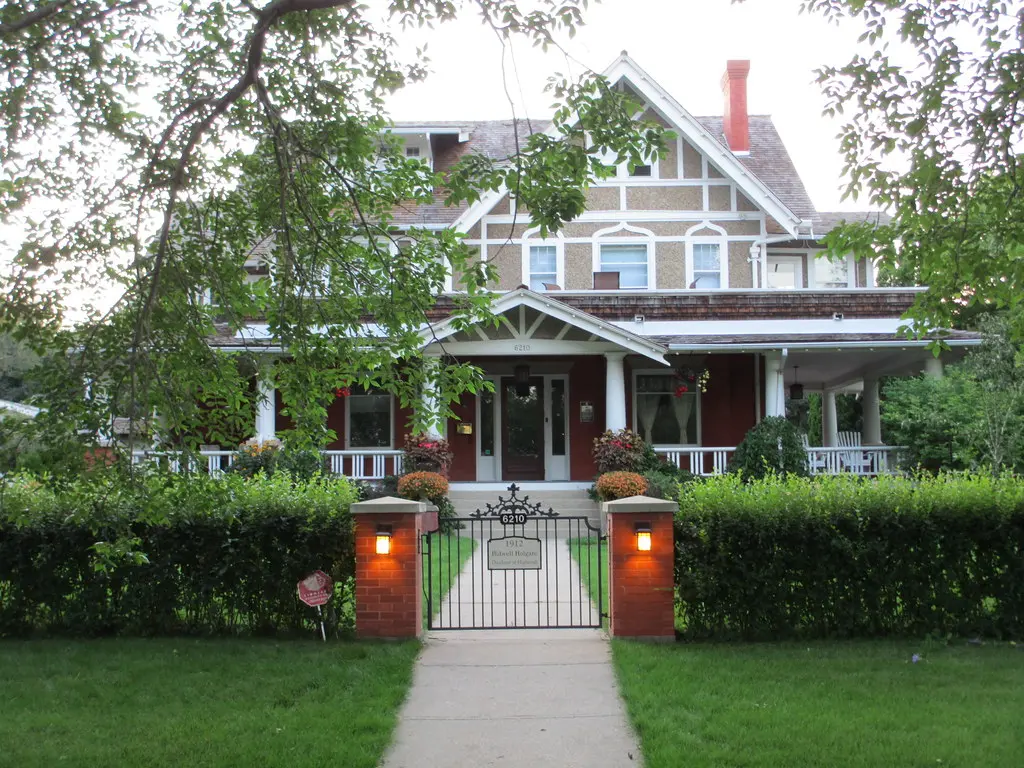
Glenora, Garneau, Alberta Avenue and Wîhkwêntôwin (formerly Oliver) have smaller clusters. Highlands is the one most people picture: craftsman and foursquare homes on tree-lined streets, plus big homes along Ada Boulevard overlooking the river valley, like the designated Magrath Mansion (1912 to 1913).
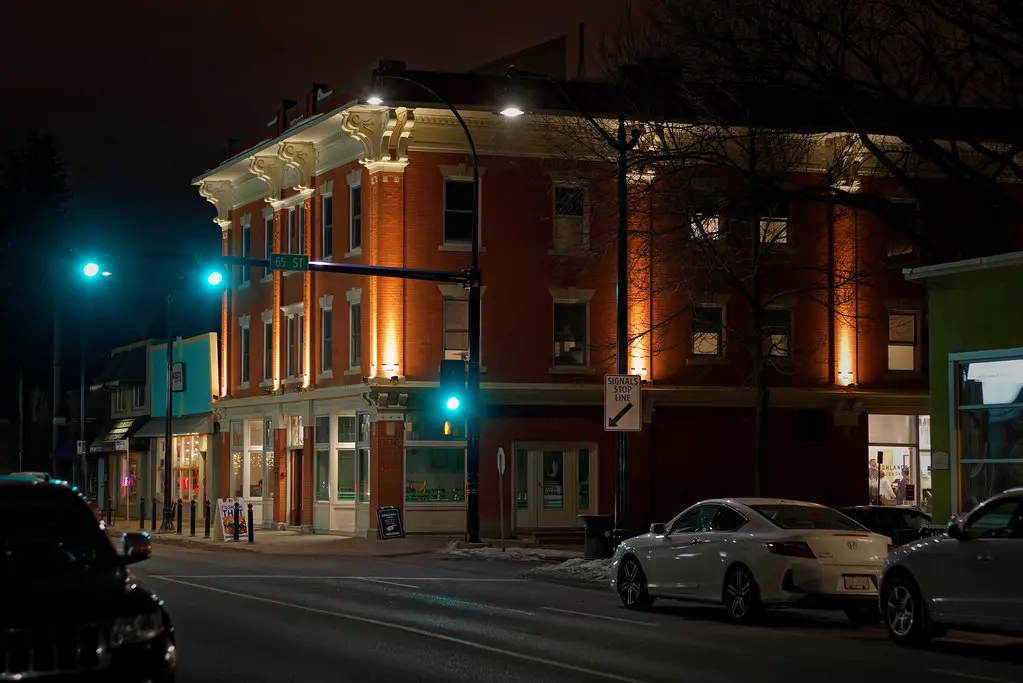
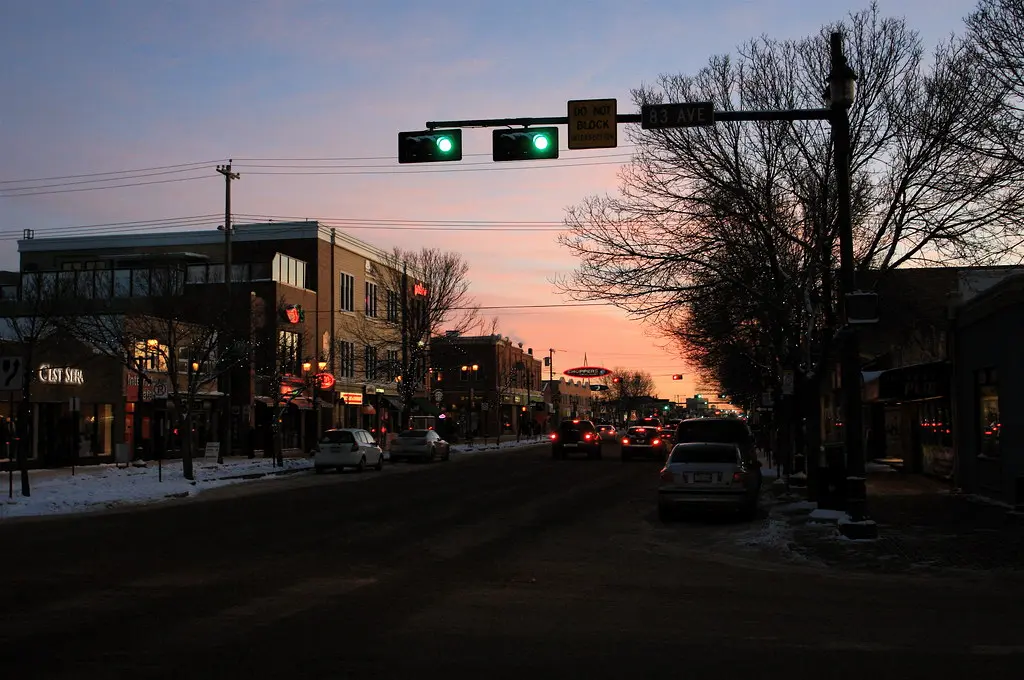
Gibbard Block (1913), a designated landmark in Highlands.Photo: Kurayba, CC BY-SA 2.0Old Strathcona, Edmonton's Provincial Historic Area.Photo: TravelingOtter, CC BY-SA 2.0
What can you renovate in a historic home in Edmonton, and what can't you?
Most of it. What you can change depends on the home's status, not its age. A home that's only on the Inventory follows normal permits. On a designated home, the inside is usually yours to update, but the protected outside features need approval and must be repaired or matched, not swapped for something new. A designated home can't be torn down.
Renovation guideWhat can you change?Pick the home's status.
Not listed or InventoryYour call, with normal permits.
There are no heritage rules here. Only designation protects a home.
6 go ahead
Kitchen, bathrooms and finishesNormal building permits.
Go ahead
Wiring, plumbing, heating and insulationNormal permits. Replacing knob-and-tube can make insurance easier.
Go ahead
Windows and doorsYour choice, with normal permits.
Go ahead
Porch, siding, trim and roofYour choice, with normal permits.
Go ahead
Addition, garage or garden suiteNormal zoning rules apply.
Go ahead
Tear down and rebuildThe Inventory gives no legal protection, so normal zoning applies.
Allowed
On the RegisterUpdate the inside. Protect the outside.
The bylaw and the agreement on title list exactly what's protected.
2 go ahead · 3 need approval or design rules · 1 not allowed
Kitchen, bathrooms and finishesMost bylaws protect the outside. A few list interior features too, so check yours.
Usually
Wiring, plumbing, heating and insulationNormal permits, but heritage grants won't pay for it. Talk to the City if it means new openings in protected walls.
Usually
Windows and doorsIf they're protected, repair first. Replace in kind, same look and material, only if repair isn't possible.
Approval
Porch, siding, trim and roofKeep the original look on protected parts. This is the work City grants help pay for.
Approval
Addition, garage or garden suiteNew work should fit in, be smaller than the original and read as new. Many designated homes have their own DC1 zoning.
Often possible
Tear down and rebuildA designated home is protected from demolition.
Not allowed
Westmount heritage areaOutside changes follow the area's design rules.
Inside work and new systems use normal permits.
2 go ahead · 4 need approval or design rules
Kitchen, bathrooms and finishesThe area's design rules cover the outside, not the inside.
Go ahead
Wiring, plumbing, heating and insulationNormal permits.
Go ahead
Windows and doorsChanges to the outside follow the area's design rules.
Design rules
Porch, siding, trim and roofChanges to the outside follow the area's design rules.
Design rules
Addition, garage or garden suiteNew building follows the area's design rules.
Design rules
Tear down and rebuildIf it isn't designated, zoning applies, and the new home must meet the area's design rules.
Design rules
Provincial Historic ResourceTalk to the Province before any work.
Altering, repairing or removing anything needs the Minister's written approval.
5 need approval or design rules · 1 not allowed
Kitchen, bathrooms and finishesAltering a Provincial Historic Resource needs the Minister's written approval.
Approval
Wiring, plumbing, heating and insulationTalk to the Province before any work starts.
Approval
Windows and doorsOnly with the Minister's written approval.
Approval
Porch, siding, trim and roofOnly with the Minister's written approval.
Approval
Addition, garage or garden suiteOnly with the Minister's written approval.
Approval
Tear down and rebuildNot without the Minister's written approval.
Not allowed
Whatever the status, the City and the Province judge changes against Canada's Standards and Guidelines for the Conservation of Historic Places. Four of its ideas come up again and again:
Repair before you replaceFix the original windows, wood and brick when you can.
Replace in kindIf a part is too far gone, the new one matches its form, material and detail.
New work fits in, but doesn't copyAn addition should be compatible, smaller than the original and easy to tell apart.
Do the least you need toThe guide calls it minimal intervention: keep as much of the old home as you can.
Before you hire anyone, email the City's heritage planners at heritageplanners@edmonton.ca. Their advice is free, and they can help you through the permit process. Your designation bylaw, and the agreement registered on title, spell out exactly which parts of the home are protected. The City also expects a designated home to be kept in "fair to good" condition.
Can a historic home on the Inventory be torn down?
It can. A home that's only on the Inventory isn't legally protected, and the City says existing zoning and development rights still apply. Only designation stops a demolition. That's why some owners choose to designate: it protects the home for good and opens up grants.
If you're buying an older home to rebuild, or buying next to one, ask early whether it's on the Inventory or Register. If you're in Westmount's heritage area, new homes there follow their own design rules too.
What grants are there for historic homes in Edmonton?
If your home is designated, the City pays up to 50% of restoration costs, to a maximum of $100,000 for a house or half duplex, then up to one third of maintenance costs, to $20,000, every 5 years. The Province adds matching grants of up to $50,000 for a Municipal Historic Resource and $100,000 for a Provincial one.
Program
House or half duplex
Other buildings
City rehabilitation grant
50% of costs, up to $100,000
50% of costs, up to $500,000
City maintenance grant
1/3 of costs, up to $20,000, every 5 years
1/3 of costs, up to $100,000, every 5 years
Alberta conservation grant
Matching grant up to $50,000 (Municipal Historic Resource) or $100,000 (Provincial). You pay at least half.
Alberta studies grant
Matching grant up to $25,000 for architects, engineers and conservation plans
The City's grants mostly pay for outside work that keeps the home's character: repairing original windows and doors, porches, woodwork, painting, and sometimes roofs, chimneys and foundations. They don't pay for new wiring, plumbing, heating, permits or regular upkeep. The Province's 2027 intake is open from November 1, 2026 to February 1, 2027.
Ava: Have an address in mind? I can check it against the Register and estimate the City grant for you.
How do you designate a home in Edmonton, and how long does it take?
The owner applies, and the whole process takes about 4 to 6 months. The home has to be on the Inventory first. After that, the City issues a Notice of Intention to Designate, prepares a maintenance and rehabilitation agreement, and City Council passes a bylaw that's registered on your title.
Get on the InventoryYou apply with a historical study. The Edmonton Historical Board's review panel looks at it and recommends it to the City.
Apply to designateA heritage planner visits, and you scope the restoration work and gather contractor quotes.
Notice of IntentionA 120-day period starts. No changes can be made to the home in the first 60 days.
Sign the agreementThe City prepares a maintenance and rehabilitation agreement with you.
Council passes the bylawThe designation goes on your title, and the home is protected and eligible for grants.
Does heritage designation lower a home's value?
There's no Edmonton study that answers this. The best-known Canadian study, which looked at about 3,000 designated properties in 24 Ontario communities, found designation couldn't be shown to hurt values, and most did as well as or better than the market. Alberta's law also says a council must compensate an owner if its designation lowers a property's economic value.
What changes is who the home appeals to. A designated home suits a buyer who loves its character and is happy to keep it. It won't suit a buyer who wants to tear down and build new. Price it, and shop for it, with that in mind.
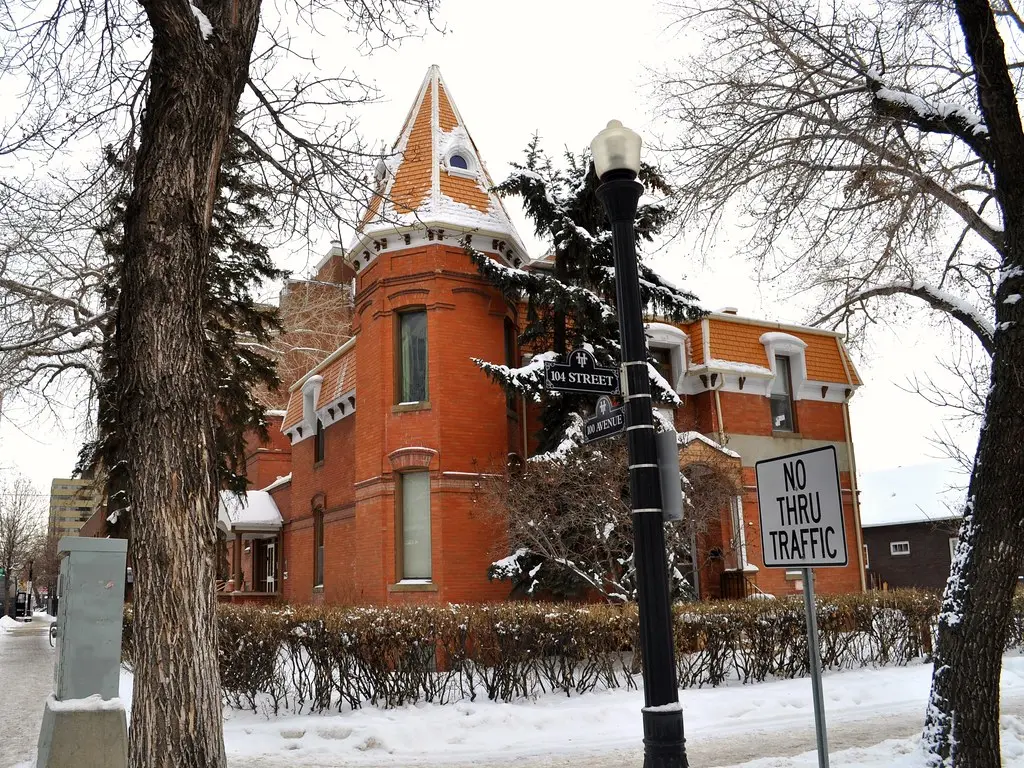
The Gariépy mansion (1902), later Rosary Hall, is on the City's Inventory but isn't designated. That's the gap this post is about.Photo: Stella Blu, CC BY 2.0
Is it harder to insure or finance a historic home?
It can be, and it's usually about the systems, not the history. Many insurers won't cover a home with knob-and-tube wiring unless there's a plan to replace it soon. Your lender needs proof of insurance before it funds the mortgage, so get a real insurance quote during your conditions, not after.
Tell your insurer the home's age, its wiring, plumbing and heating, and whether it's designated. Replacement cost can be higher on a home with original details, so ask how the policy handles repairs "in kind." Designation itself doesn't stop a lender from approving a mortgage, but a lender will look at the home's condition like any other.
What should I inspect in an older Edmonton home?
Book a home inspector who knows older homes, and add specialists where the age points to it. Wiring, lead paint, vermiculite insulation, an old water service line and the foundation are the big five. Your conditions usually give you about 7 to 14 days, so line people up before you write the offer.
WiringKnob-and-tube was common in Alberta homes from the early 1900s to the 1950s. Have a licensed electrician look if the home was built before 1950.
Lead paintHealth Canada says a home built before 1960 probably has lead paint. Homes from 1960 to 1990 may have it outside. It matters most when you sand or strip.
Vermiculite in the atticLoose, pebbly attic insulation may be Zonolite, which can contain asbestos. Leave it alone and have a professional test it.
Water service lineSome older Edmonton homes still have a lead water line. EPCOR offers free testing and a filter to customers with one, so ask.
Foundation and basementOld foundations, cracks, drainage and past water in the basement. A sewer line camera scope is worth it on an old lot.
Original windows and porchOn a designated home, these are often the features you must repair rather than replace, and the ones grants help with.
Ava: Want this older-home checklist in your inbox for your next showing? I'll send it over.
How do I find out if a house is historic?
Start with the City's Register: search it in the Heritage Home Check above. If it isn't there, email heritageplanners@edmonton.ca to ask about the Inventory. Provincial sites are on the Alberta Register of Historic Places. When you buy, your lawyer will see any designation on the land title.
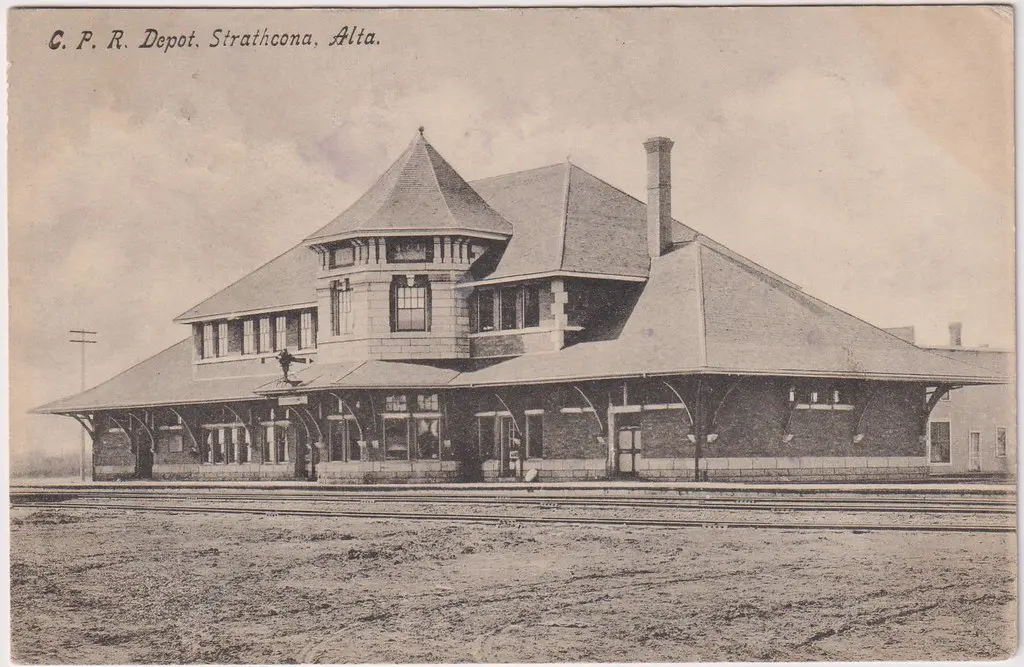
Highlands keeps its history on its sleeve.Photo: Mack Male, CC BY-SA 2.0The Strathcona CPR station on an early postcard. It's on the Register today.Photo: Jason Woodhead, CC BY 2.0
The City is also writing a new Heritage Places Strategy to replace its 2009 plan. The March 2026 draft suggests exploring new grants and incentives, so the programs above may change. Check the City's historic resources page before you count on a number.
What I'm seeing
When I help buyers
Falling in love with a character home in Highlands, Westmount or Strathcona is the easy part. I look past the porch and the woodwork first. I check whether the home is on the City's Register or Inventory, bring in an electrician when the wiring could be original, and get your insurance quote started before conditions come off. The goal is a home you love that you can also insure, finance and enjoy for years.
When I help sellers
No two of these homes are alike, and that's the point. The right buyer for a historic home isn't someone looking for a quick flip or a tear-down. It's someone who values the original details as much as you do. So I market the story: the year it was built, the craftsmanship and the street it sits on. I'm not looking for just any buyer. I'm looking for the right people for your house.
Brent Deptuck, REALTOR® · Real Broker
Questions people ask about historic homes
Can the City designate my home without my permission?
Alberta's Historical Resources Act lets a council designate by bylaw, but if that lowers the property's economic value, the council must compensate the owner. In Edmonton, designations come from owners who apply.
Is the inside of a designated home protected too?
Usually designation covers the outside character. Some bylaws list interior features too, so read the home's Statement of Significance and designation bylaw.
Do I pay less property tax on a designated home?
Not on a house today. The City's tax exemption is for non-residential heritage buildings: up to $50,000 a year in tax increases for 10 years, if the owner invests at least $100,000.
Can I add a suite or garage to a designated home?
Often, yes. Additions can still happen if they're sympathetic to the original home. Talk to the heritage planners first, because many designated homes have their own DC1 zoning.
Is Rutherford House a historic home I can visit?
Yes. Rutherford House, the home of Alberta's first premier, is a Provincial Historic Site on the University of Alberta campus. It's a good place to see what a 1911 Edmonton home looked like inside.
Ava · character home alertsFirst to know when one comes up.
Character homes in these areas don't come up often. Pick the neighbourhoods you love, and I'll let you know when one does.
No spam. Ava, Brent's assistant, sets it up in a quick chat, and you can stop anytime.
Your next step
Thinking about a character home? Look at the neighbourhoods first, then talk it through. Ava can tell you which areas have the most historic homes and what to check before you write an offer.