
Real Estate YEGHome starts here · Real Broker 587-400-4668
Blog · Neighbourhood guides · Glenora

Glenora and MacKinnon Ravine: How Neighbours Stopped a Freeway

Brent DeptuckBy Brent Deptuck with Real Broker
Updated Nov 23, 2026 · 7 min read
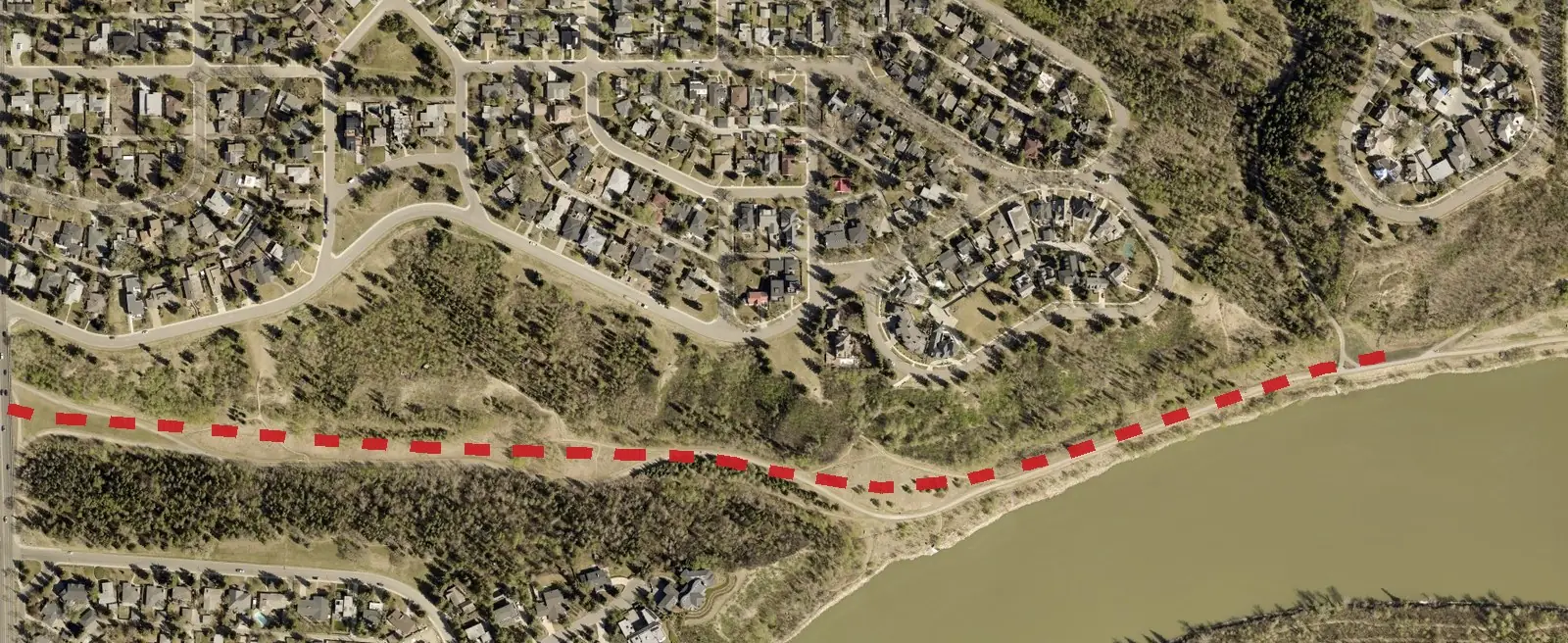
Aerial: City of Edmonton Open Data, 2023. Red line: approximate 1964 route (illustration).

Walk the paved trail through MacKinnon Ravine and it feels like it was always meant to be a park. It wasn't. That wide, flat path to the river sits where a six-lane freeway was supposed to go. Here's who planned it, who stopped it, and what it means for the homes beside it.

Key takeaways
  • In 1964, council approved a plan with a six-lane road down MacKinnon Ravine, on Glenora's southern edge.
  • Neighbours led by artist Margaret Chappelle fought it for almost 20 years. The route came out of the City's bylaw in 1974, and the ravine opened as a park in 1984.
  • The trail is flat because the roadbed was already cleared. You're walking the freeway that never got built.
  • The Carruthers Caveat, the lot rules from Glenora's first sales, still sits on more than 400 Glenora titles.
  • The typical Glenora home without a suite is assessed at about $791,500. That's an assessment, not a sale price.

Ava
Ava · Brent's assistantAsk me about Glenora.

Was there really a freeway planned through MacKinnon Ravine?

Short answer: Yes. In December 1964, City council approved a transportation plan with freeways into downtown, including a six-lane road down MacKinnon Ravine on Glenora's southern edge. Survey crews arrived in 1965, and trees, some over 200 years old, came down. Neighbours fought it for almost 20 years, and the ravine opened as a park in 1984 instead.
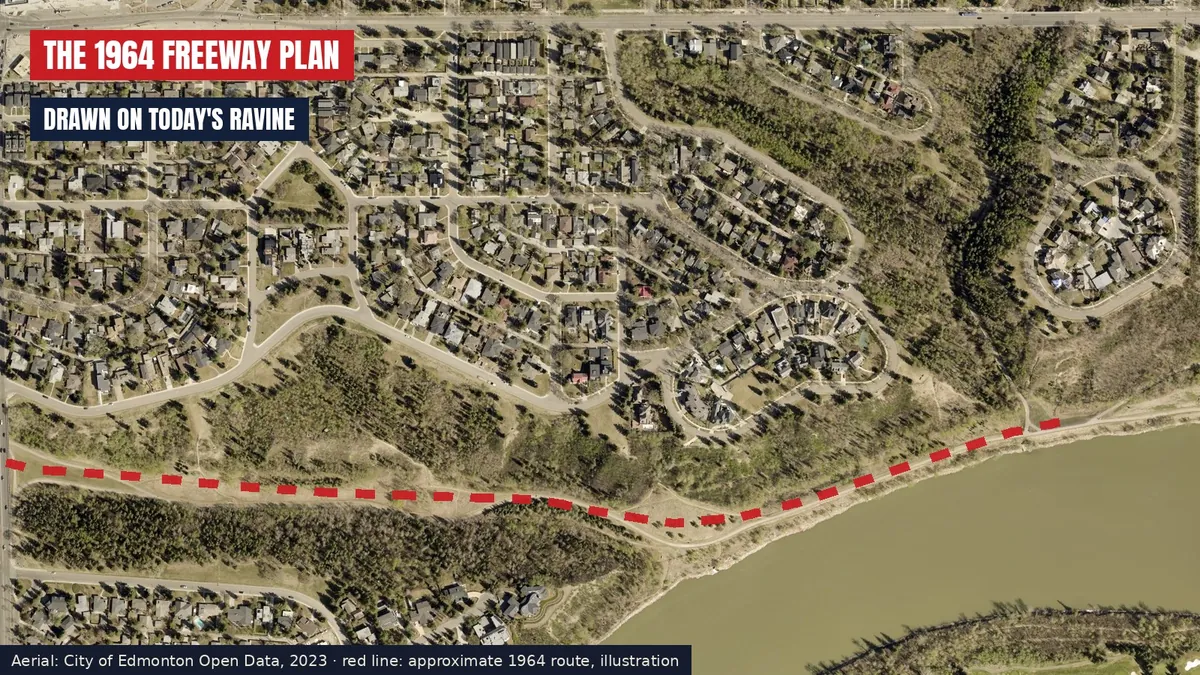
The approximate 1964 freeway route drawn as a red dashed line over a 2023 aerial photo of MacKinnon Ravine below Glenora's streets
The 1964 plan, drawn on today's ravine. Glenora's curving streets sit above it.Aerial: City of Edmonton Open Data, 2023. The red line is an approximate route, an illustration.

The plan was the Metropolitan Edmonton Transportation Study, known as METS. It called for freeways feeding downtown, with roads through five river valley ravines. One estimate said it would "destroy 11 per cent of the river valley." The Mill Creek ravine road was shelved right away. MacKinnon's went ahead.

Who stopped the MacKinnon Ravine freeway?

Neighbours did, and it took almost 20 years. Artist Margaret Chappelle, whose home backed onto the ravine, helped start the Save Our Parks Association. Residents wrote letters, petitioned, marched with "Treeways, not freeways" signs and walked onto the roadbed. Council took the route out of the transportation bylaw in 1974 and ended the river valley roads policy in 1983.

  1. 1964Council approves METS, freeway included.
  2. 1965Chappelle's letter. Surveys, then chainsaws.
  3. 1972The City quietly cuts more trees. The fight restarts.
  4. 1974The route comes out of the transportation bylaw.
  5. 1981Council orders a residents' vote, then scraps it.
  6. 1983Council ends the river valley roads policy.
  7. 1984MacKinnon Ravine Park opens, with ice cream and hot-air balloons.
  8. TodayA paved trail runs where the six lanes would have.

On January 7, 1965, Chappelle wrote in the Edmonton Journal: "We have no right to destroy this beauty." That spring the City started survey work, and by October 1965 contractors were cutting trees. Women marched and vowed to sit in the trees, and around October 18, Chappelle and seven other women walked onto the roadbed until the machine operators drove away. Neighbourhood kids pulled up the survey stakes.
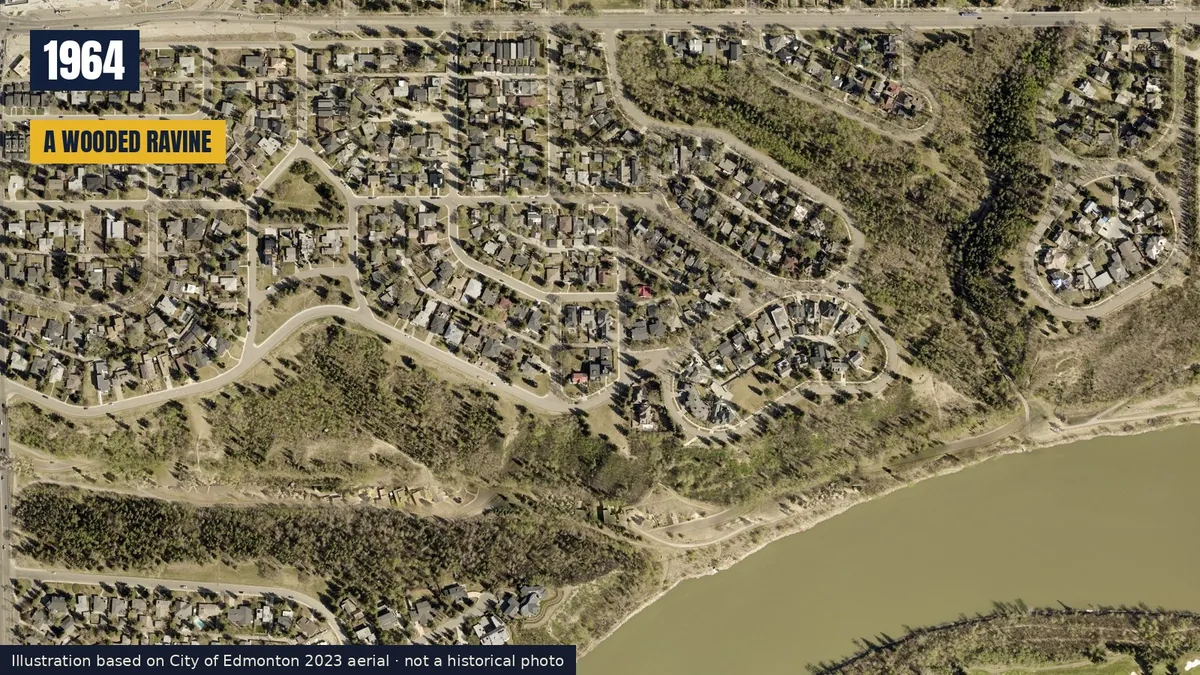
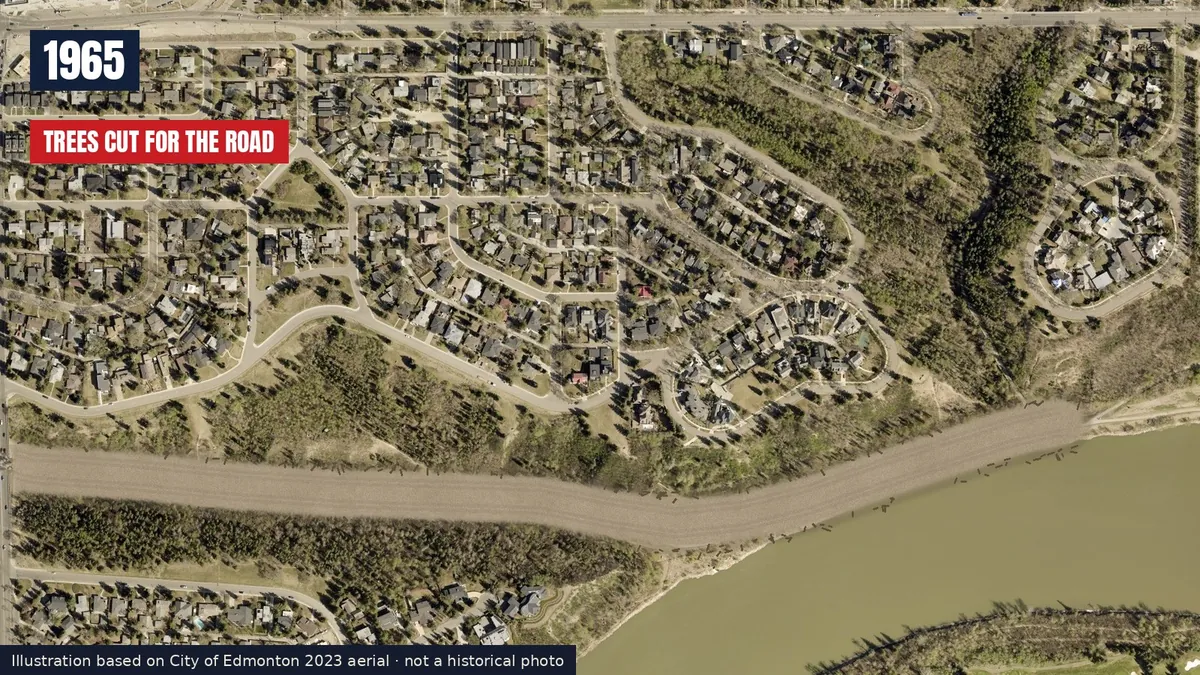
Illustration of MacKinnon Ravine as a fully wooded valley
Before: a wooded ravine floor.Illustration based on the City of Edmonton's 2023 aerial. Not a historical photo.
Illustration of a cleared dirt corridor along the floor of MacKinnon Ravine
1965: trees cut for the road.Illustration based on the City of Edmonton's 2023 aerial. Not a historical photo.

You may have heard that Chappelle lay down in front of a bulldozer. Accounts vary, so treat that part as legend. What's on the record is the long haul: the work stopped and started for years, and so did the campaign.

Watch · short video
You've walked on this freeway. It was never built.

The whole story in one short video: the plan, the letter, the chainsaws and the neighbours who wouldn't move.

Plays from YouTube when you tap it.

Why is the MacKinnon Ravine trail so wide and flat?

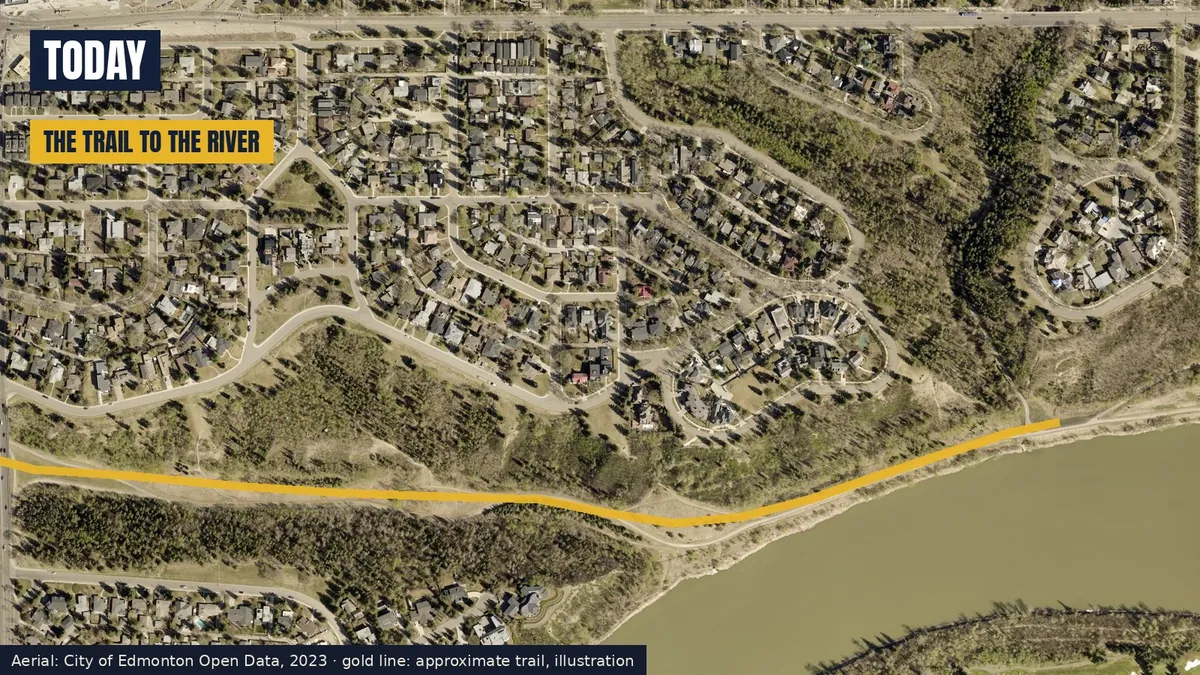
Because the freeway work got partway done. By the time it stopped, crews had cleared trees and cut the roadbed along the ravine floor. When the ravine became a park in 1984, that cleared line became the paved trail you walk or bike down to the river today. In other words, you're walking on the freeway that never got built.
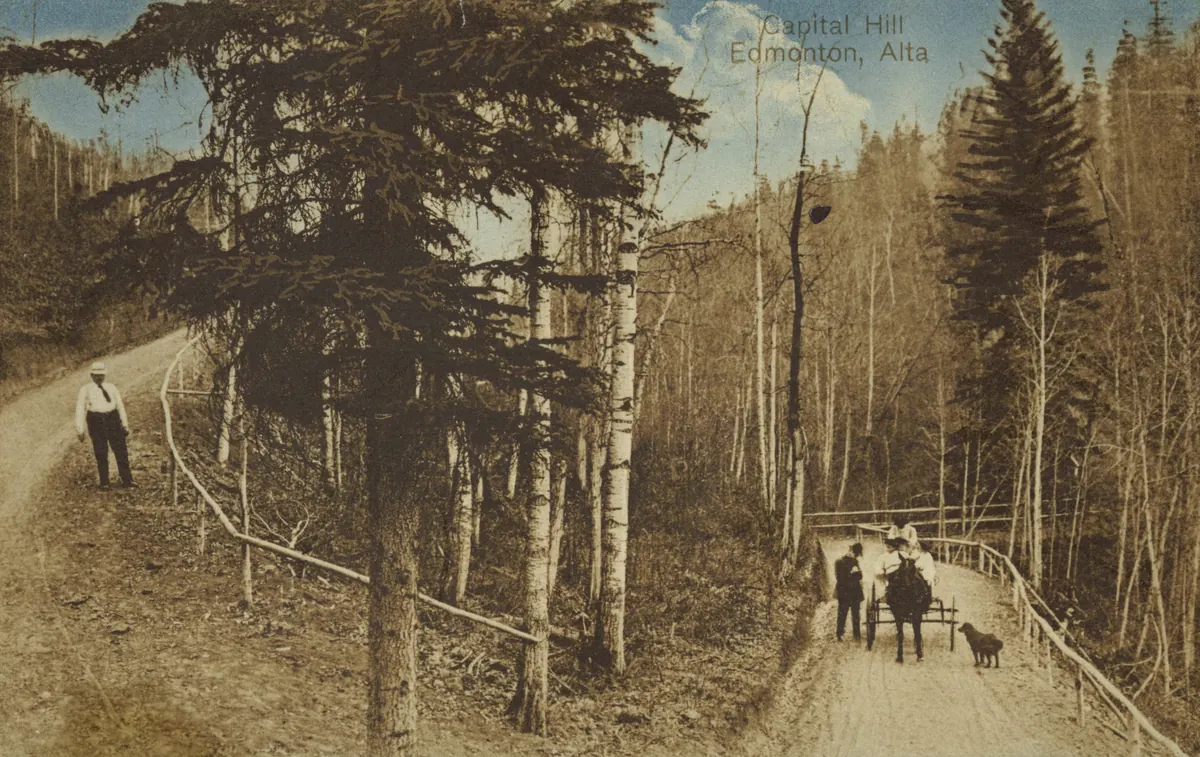
Tinted 1913 postcard of people, a horse and a dog on a dirt road with a rail fence through a wooded ravine on Capital Hill, Edmonton
Then · 1913 Walkers, a horse and a dog on a ravine road on Capital Hill, the hillside subdivision beside Glenora. Local historians say these Capital Hill trails later became known as MacKinnon Ravine.Postcard, H. Enida Olive Co., Calgary. Peel's Prairie Provinces, University of Alberta Libraries, PC007079. Public Domain Mark 1.0.
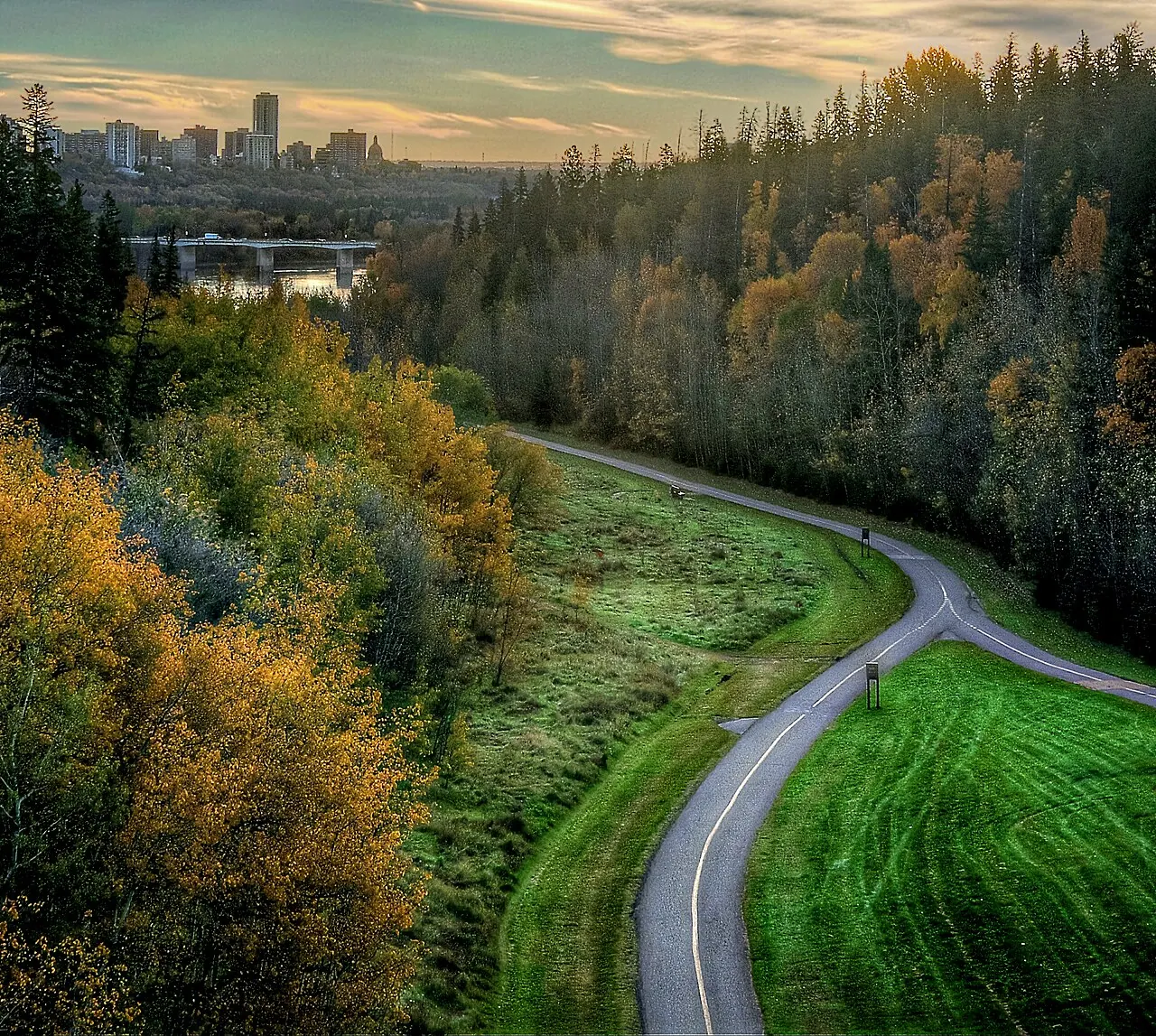
Aerial-style view of the paved MacKinnon Ravine trail curving through autumn trees, with downtown Edmonton on the horizon
Now · 2016 The paved MacKinnon Ravine trail, with downtown on the horizon.Photo: WinterE229, Wikimedia Commons. CC0 1.0 (public domain dedication).
The MacKinnon Ravine trail drawn in gold over a 2023 aerial photo, running along the ravine floor to the North Saskatchewan River
Today: the trail to the river.Aerial: City of Edmonton Open Data, 2023. The gold line is approximate.

Ava: Curious how close a Glenora street is to the trail, or to the new LRT stop? Pick one and I'll show you.

What happened to Margaret Chappelle?

She spent her last years quietly, still sketching by the ravine, and died in 1992. Her handwritten will, found later in her garage, left almost all of her estate to the Edmonton SPCA, and the Humane Society's Chappelle Centre opened in 2009. Next time you're on the trail, she's the one to thank.
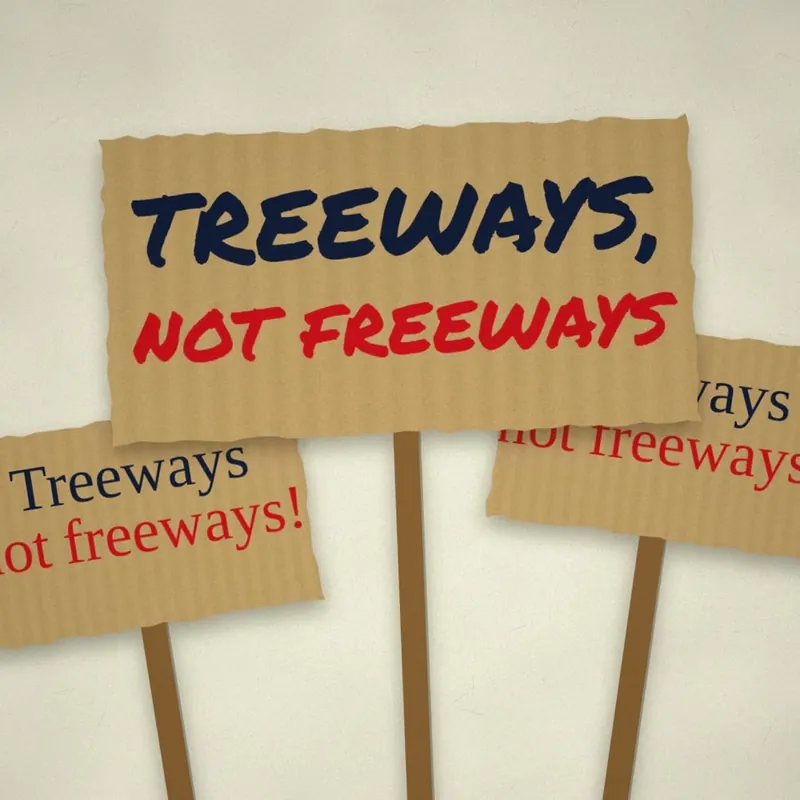
Illustrated cardboard protest signs reading Treeways, not freeways
"Treeways, not freeways."Illustration from Brent's video. Not a historical photo.
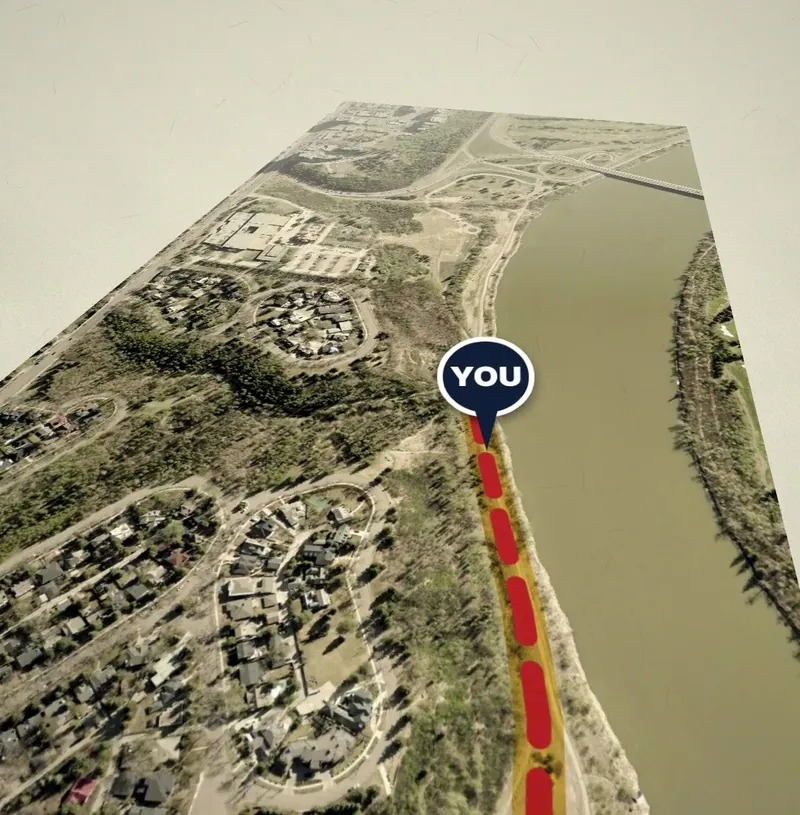
A 3D view of the ravine trail along the river with a You are here pin
The trail today, in 3D.From Brent's video, built on the City of Edmonton's 2023 aerial (Open Data).
Interactive · Free tool

Glenora Street Check

Pick a street. See its homes, the ravine and the LRT.

Choose any of Glenora's 34 streets. You'll see its typical assessed value, how far it is from the MacKinnon Ravine trail and the Glenora LRT Stop, and the historic places on or near it, all from City of Edmonton open data. Nothing you pick leaves this page.

See the street closest to the old freeway route.

1 · Pick a street

Glencairn (1934), 15 Wellington Crescent NWGreer Residence (1929), 10220 - 133 Street NWJanes Residence (1930), 13114 - 104 Avenue NWSterling Woods Residence (1912), 12809 - WOODBEND PLACE NWSpencer Residence (1921), 7 - ALEXANDER CIRCLE NWAllyn Residence (1924), 13618 - 103 AVENUE NWMartin Residence (1930), 10220 - 130 Street NWReed Residence (1929), 10348 - 127 STREET NWPearson Residence (1931), 13109 - 104 Avenue NWSchlain Residence (1954), 13854 Ravine Drive NWGlenora Light Standards (), GlenoraChauffeur's Residence (1913), 12903 - 102 Avenue NWBrick Residence (1913), 10718 - 126 STREET NWSmith Residence (1950), 10533 - 134 Street NWMayor MacKenzie Residence (1912), 10530 - 125 STREET NWGriesbach Residence (1912), 12916 - 102 AvenueWalsh Residence (1946), 13020 - 102 AVENUE NWProvincial Museum and Archives of Alberta (1965), 12845 - 102 Avenue NWConnell Residence (1913), 10729 - 123 STREET NWWallbridge Residence (1912), 12606 - 104 AVENUE NWMayor Evans Residence (1911), 12620 - 104 AVENUE NWCurlett Residence (1944), 13308 - 102 AVENUE NWDriscoll Residence (1935), 12 Tweedsmuir Crescent NWFrank Lansdowne Residence (1913), 12920 - STONY PLAIN ROAD NWLakusta Residence (1959), 10333 - 132 StreetSamuels Residence (1959), 13842 - RAVINE DRIVE NWBank of Toronto Manager's Residence (1942), 26 Wellington Crescent NWFreeman Residence (1929), 23 Wellington Crescent NWDr. Robert Wells Residence (1911), 10328 - CONNAUGHT DRIVE NWIles Residence (1948), 10515 - 133 STREET NWDunn Residence (1914/1935), 10348 Connaught Drive NWMacLeod Residence (1929), 52 St. George's Crescent NWParsons/Bruce Residence (1937), 10208 - 125 Street NWBashor Residence (1925), 10750 - 125 STREET NWStewart Residence (1929), 10326 - 132 STREET NWMissiaen Residence (1949), 14030 - 104 Avenue NWSimpson Residence (1912), 10414 - 125 STREET NWGibbons Residence (1911), 10534 - 125 STREET NWCumming Residence (), 10629 - 127 Street NWRobert Burrell Residence (1911), 10213 - 125 STREET NWTrelawn Residence (1929), 19 Wellington Crescent NWHardisty Residence (1913), 10549 - 126 STREET NWBrennan Residence (1921), 13612 - 103 AVENUE NWWilliam O'Leary Residence (1913), 10544 - 126 STREET NWSchlader Residence (1912), 10728 - 125 STREET NWAnderson Residence (1919), 13219 - 102 AVENUE NWTalmud Torah School (1963), 13212 - 106 AVENUE NWWest Residence (1914-1915), 13101 Churchill CrescentMcPherson Residence (1949), 10228 - 130 Street NWClifton Residence (1953), 14040 - 106A Avenue NWCornwall Residence (1912), 10330 - 127 STREET NWLaw Residence (1912), 10709 - 126 STREET NWStanley May Residence (1913), 10550 - 126 STREET NWSwanson Residence (1942), 9 Tweedsmuir Crescent NWMarshall Hopkins Residence (1913), 10720 - 126 STREET NWChalmers Residence (1914), 13012 - 104 Avenue NWCrescent Place (1970), 13910 - STONY PLAIN ROAD NWJenner Residence (1952), 13719 - 101A AVENUE NWCharles Frost Residence (1912), 10423 - 127 STREET NWSouch Residence (1953), 13520 - 106A AVENUE NWGaboury Residence (1952), 13618 - 100 Avenue NWShoctor Residence (1948), 13104 - 104 Avenue NWJohn McIntosh Residence/Ravina Apartments (1912), 10325 - VILLA AVENUE NWDr. Oscar Strong Residence (1912), 10317 - VILLA AVENUE NWCharles Richardson Residence (1915), 12626 - 104 AVENUE NWBoyce Residence (1930), 13110 - 104 Avenue NWSteele Residence (1939), 10220 - 134 Street NWDr. Terwillegar Residence (1913), 10727 - 125 STREET NWMacPherson Residence (1948), 10306 - 137 STREET NWDr. Bako Residence (), 10533 - 130 STREET NWLinsdell Residence (1949), 10440 - 140 Street NWFrank Crook Residence (1912), 10238 - WADHURST ROAD NWWalter Crawford Residence (1912), 10812 - 126 STREET NWMcNeill Residence (1929), 10229 - 132 Street NWLieberman Residence (1929), 54 St. George's Crescent NWPechet Residence (1956), 13603 - 106A AVENUE NWGilpin Residence (1913), 10525 - 129 Street NWCautley Residence (1929), 10402 - 127 STREET NWMalcom Groat Estate (1907), 10131 - CLIFTON PLACE NWMayhew Residence (1946), 10240 - 136 STREET NWCarlson Residence (1913), 10546 - 128 STREET NWFalkenberg Residence (1930), 10332 - 132 Street NWSt. Andrew's United Church (1958), 9915 - 148 StreetCrawford Residence (1930), 10352 - 127 STREET NWVogel Residence (1946), 10433 - 134 STREET NWCumming Residence (), 10629 127 Street NWTaylor Residence (1932), 92 St. George's Crescent NWField/Secord Residence (1913), 13101 - 104 AVENUE NWMacMurchy Residence (1928), 10220 Churchill Crescent NWGlenora Substation (1956), 10322 - 135 StreetCampbell Residence (1916), 12608 - 107 Avenue NWGeggie Residence (1929), 10 Wellington Crescent NWEllen Elliot Residence (), 10543 125 Street NWDower Residence (1947), 99 - ST GEORGE'S CRESCENT NWKruger Residence (1953), 14015 - 103 Avenue NWGreshuk Residence (1952), 10430 - CONNAUGHT DRIVE NWSinger Residence (1949), 10218 - 137 STREET NWGlenora School (1940), 13520 - 102 AVENUE NWFugl/Shearer Residence (1913), 10719 - 127 STREET NWMason Residence (1929), 5 Tweedsmuir Crescent NWSee House/Macdonald Residence (1933-1934), 10416 Glenora Crescent NWWilliamson Residence (1920), 10216 - CONNAUGHT DRIVE NWMcCray's Garage (1914), 12520 - 102 AVENUE NWCampbell Residence (1911), 10534 - 126 STREET NWRobert MacDonald Residence (1912), 10804 - 126 STREET NWSprague Residence (1950), 6 Wellington Crescent NWFleming Residence (1952), 14004 - 100 AVENUE NWWallace McDonald Residence (1913), 10236 - WADHURST ROAD NWFane Residence (1929), 12 Alexander Circle NWJesse Masters Residence (1912), 12514 - 106 AVENUE NWAndrews Residence (1930), 12420 - JASPER AVENUE NWMcNeill Residence (1930), 13029 - 104 Avenue NWAlbert Cairns Residence (1913), 14409 - SUMMIT DRIVE NWStreet Railway Substation #600 (1938), 10643 - 124 STREET NWWilliam Jackson Residence (1914), 10810 - 126 STREET NWGilbert Residence (1930), 12720 - 102 AVENUE NWLawson Residence (1953), 10611 - 137 STREET NWCummer Residence (1929), 10317 - 134 Street NWMunroe Residence (1913), 10517 - 126 Street NWGlenora Firehall No.4 (1950), 10527 - 142 STREET NWApache Seeds (1964), 10130 - 149 Street NWDowdell Residence (1929), 9 Wellington Crescent NWKline Residence (1952), 13612 - RAVINE DRIVE NWMunroe Residence (1927), 13016 - 104 AVENUE NWAubrey Fullerton Residence (1912), 10312 - VILLA AVENUE NWMayor Dantzer Residence (1915), 10236 - CONNAUGHT DRIVE NWMacKenzie Residence (1942), 10311 - 134 Street NWPaterson Residence (1930), 9 Alexander Circle NWMontgomery Residence (1929), 10327 - 134 Street NWClifford Bernardine Residence (1912), 10242 - WADHURST ROAD NWWilson Residence (1939), 40 St. George's Crescent NWMacLean Residence (1931), 46 - ST GEORGE'S CRESCENT NWResidence (1914), 8 - ALEXANDER CIRCLE NWMurphy Residence (1914), 10604 - 127 STREET NWHagelstein Residence (1948), 22 St. George's Crescent NWCurtis Residence (1923), 10324 - 130 Street NWProvincial Museum Petrified Log (), 12845 - 102 AvenueJohn Sherry Residence (1913), 10318 - VILLA AVENUE NWKennedy Residence (1954), 13802 - RAVINE DRIVE NWKallal Duplex (1954), 10620 - 136 STREET NWLodge Residence (1926), 10341 - VILLA AVENUE NWBiglow Residence (1947), 73 St. George's Crescent NWRobert Haines Residence (1913), 10419 - 127 STREET NWGoodridge Residence (1915), 10226 - CONNAUGHT DRIVE NWDuncan Cameron Residence (1913), 10727 - 126 STREET NWHayward Residence (1944), 13516 - RAVINE DRIVE NWHyndman Residence (1946), 10123 - 136 STREET NWJasper Place Savings & Credit Union (1959), 10137 - 150 Street NWEnglish Residence (1914), 10327 - 133 Street NWProvincial Musum Stark Oak (), 12845 - 102 Avenue NWDynes Residence (1945), 12 St. George's Crescent NWHetherington Residence (1950), 13108 - CHURCHILL CRESCENT NWMichaelchuk Residence (1965), 13858 RAVINE DRIVE NWVisser Residence (1947), 10526 - 134 STREET NWDe Wynter Residence (1928), 10446 Connaught Drive NWGovernment House (1913), 12845 - 102 Avenue NWCF Newell Residence (1911), 10304 - Connaught Drive NWLoney Residence (1928), 13312 - 102 AVENUE NWOstolosky Residence (1969), 1 Alexander Circle NWWilliam Brown Residence (1915), 10242 - CONNAUGHT DRIVE NWDittrich Residence (1953), 13882 Ravine Drive NWKennedy Residence (1932), 13111 - 104 Avenue NWSutherland Residence (1929), 28 St. George's Crescent NWShaw Residence (1954), 10108 - 138 STREET NWG.H. MacDonald Residence (1913), 10360 Connaught Drive NWParkington Building (1963), 12415 - STONY PLAIN ROAD NWLowe Residence (1927), 10340 Connaught Drive NWGreenhalgh Residence (1948), 10331 - 138 STREET NWDr. W.D. Ferris (1911), 12704 - 102 AVENUE NWWotherspoon Residence (1948), 10311 - 138 STREET NWMiller Residence (1945), 12730 - 102 AVENUE NWCatherine McCauley Residence (1912), 10806 - 126 STREET NWRobert McDonald Residence (1912), 10347 - VILLA AVENUE NWLa Key Residence (1914), 10724 - 126 STREET NWNorthwestern Utilities Demonstration House (1935), 13224 - 102 AVENUE NWRogers Residence (1913), 10637 - 126 Street NWBoulevard Silver Maples (1910), 102-103 Aves. - 125 St.William Blakey Residence (1946), 13526 - 101 AVENUE NWHenry Residence (1932), 4 Wellington Crescent NWFrost Residence (1952), 10431 - 140 STREET NWAlexander Circle (1954), 13301 - 103 Avenue NWRobertson Wesley United Church (1914), 10209 - 123 STREET NWMcLeod Residence (1931), 10310 - 132 Street NWPike Residence (1949), 10502 - 137 STREET NWGeorge Graydon Residence (1912), 10336 - VILLA AVENUE NWMcClory Residence (1927), 10406 - CONNAUGHT DRIVE NWArmstrong Residence (1941), 104 St. George's Crescent NWFoster Residence (1948), 10314 - 137 STREET NWPrimrose Residence (1938), 4 Tweedsmuir Crescent NWBradley Residence (1913), 13115 - CHURCHILL CRESCENT NWMalin Residence (1977), 10216 - 130 Street NWO'Connor Residence (1914), 36 - ST GEORGE'S CRESCENT NWWestminster School (1970), 13712 - 104 Avenue LRT GLENORAMACKINNON RAVINEGROAT RAVINESTONY PLAIN RDCRESTWOODWESTMOUNTGROVENORTO THE RIVERGlenora Stop1964 freeway plan (never built)
Tap a street on the map
Your streetRavine trail1964 freeway planGlenora LRT StopHistoric place
Map: City of Edmonton Open Data (roads, pathways, neighbourhoods, Historic Resources). Freeway line and LRT stop location are approximate. On a phone, use two fingers to move the map.
Pick a street2026 assessment · Glenora

Choose a street from the list, tap one on the map, or press Try an example.

Glenora neighbourhood guide Ava, Brent's assistant, can walk you through it. Or text 587-400-4668.

Who built Glenora, and where does the name come from?

Montreal businessman James Carruthers bought the land in 1906 and planned Glenora as a "Garden City" suburb: curving streets that follow the ravines instead of a grid, big lots and lots of trees. Nobody knows for sure where the name comes from. The City lists three ideas, from an Ontario village to a Montreal mill.

The land started with Malcolm Groat, a Scot who joined the Hudson's Bay Company in 1861 and claimed about 900 acres west of Fort Edmonton. (Yes, Groat Road is named after him.) As for "Glenora," the City's three theories are a village of that name in Ontario, the Glenora Mill in Montreal, or Scottish "glen" (valley) plus French "or" (gold), for ravines running down to a river where people once panned for gold.

Carruthers helped pay for bridges over the ravines that cut the area off from the city, and in 1910 a streetcar line reached west, which helped the new suburb take off.

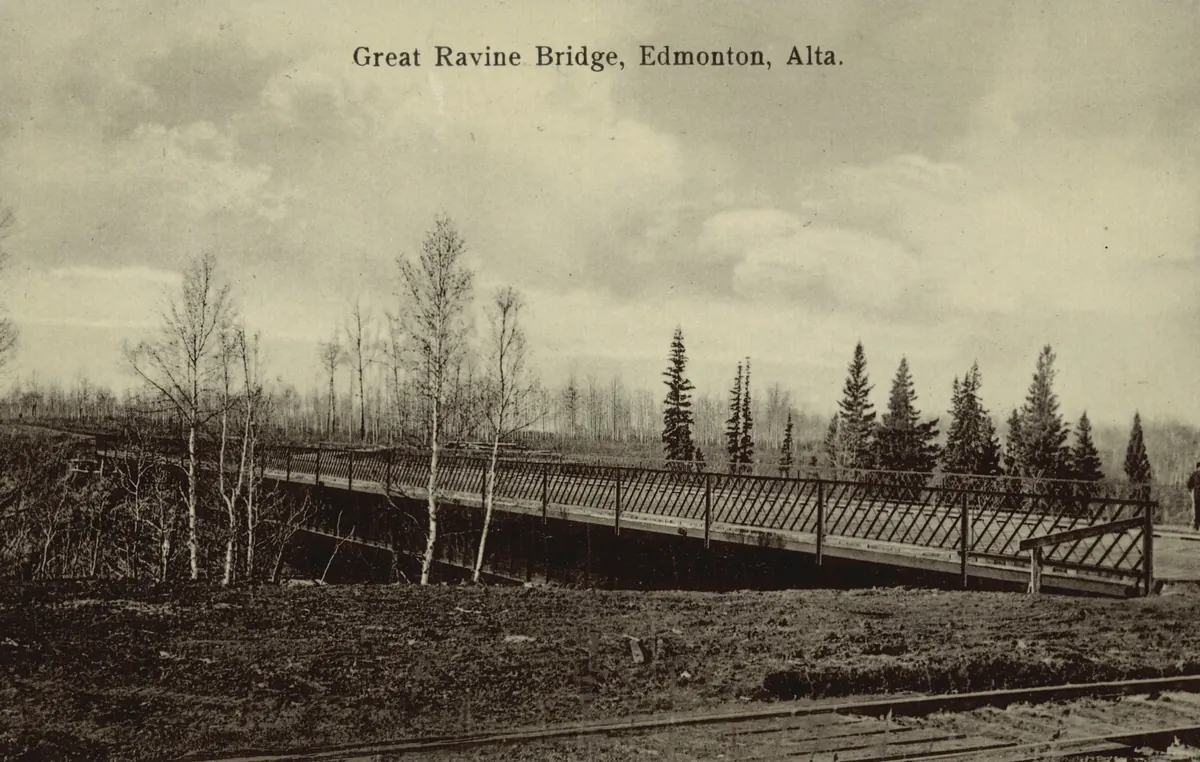
Sepia postcard titled Great Ravine Bridge, Edmonton, showing a new bridge among young birch and spruce with railway tracks in front
About 1910 A postcard titled "Great Ravine Bridge, Edmonton," with railway tracks in front. It appears to show the new bridge over Groat Ravine, the kind of link Carruthers helped pay for.Postcard published for G.H. Graydon, Edmonton. Peel's Prairie Provinces, University of Alberta Libraries, PC013956. Public Domain Mark 1.0.
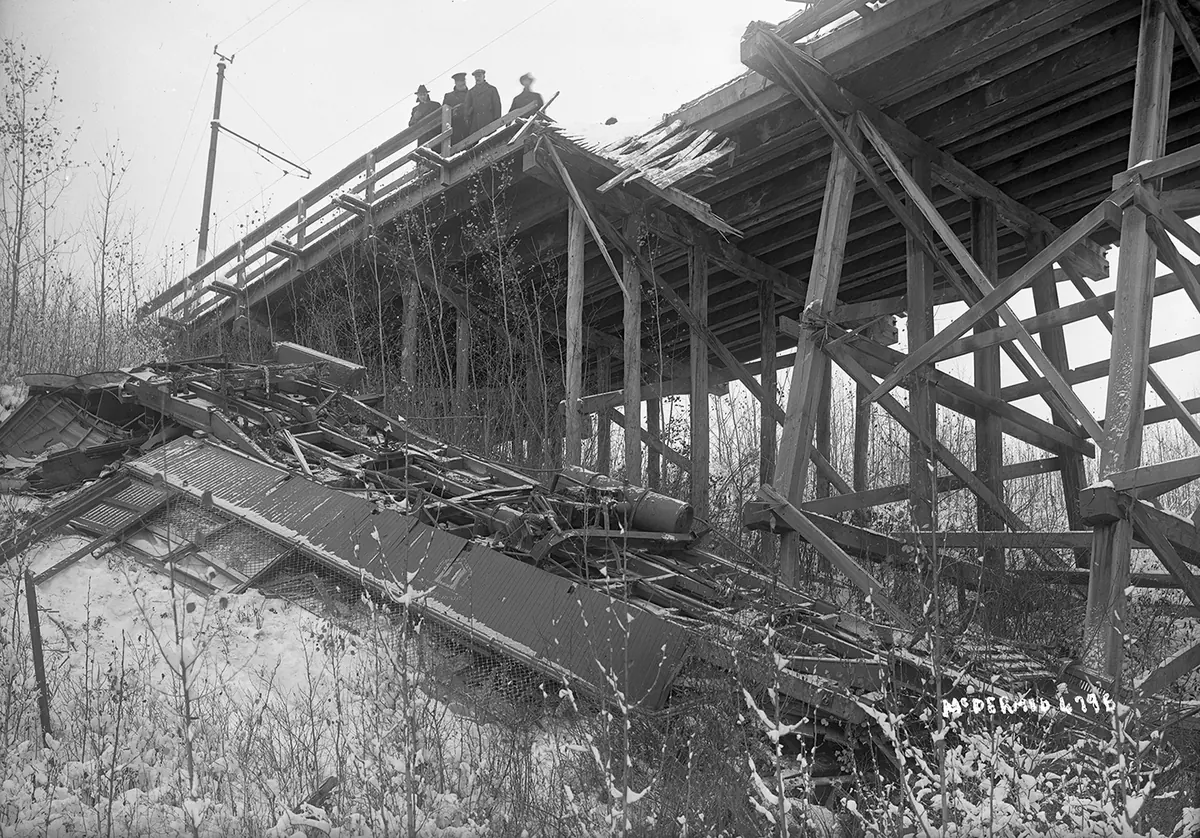
Black and white photo of a wrecked wooden streetcar lying below a timber trestle bridge in a snowy ravine, with men standing on the bridge above
Oct 22, 1919 Streetcar No. 21 lies at the bottom of Groat Ravine after leaving the track on an icy morning. The motorman and passengers survived.Photo: McDermid Studio. Glenbow Library and Archives, University of Calgary, NC-6-4796. Public domain (Canadian photograph made before 1949).

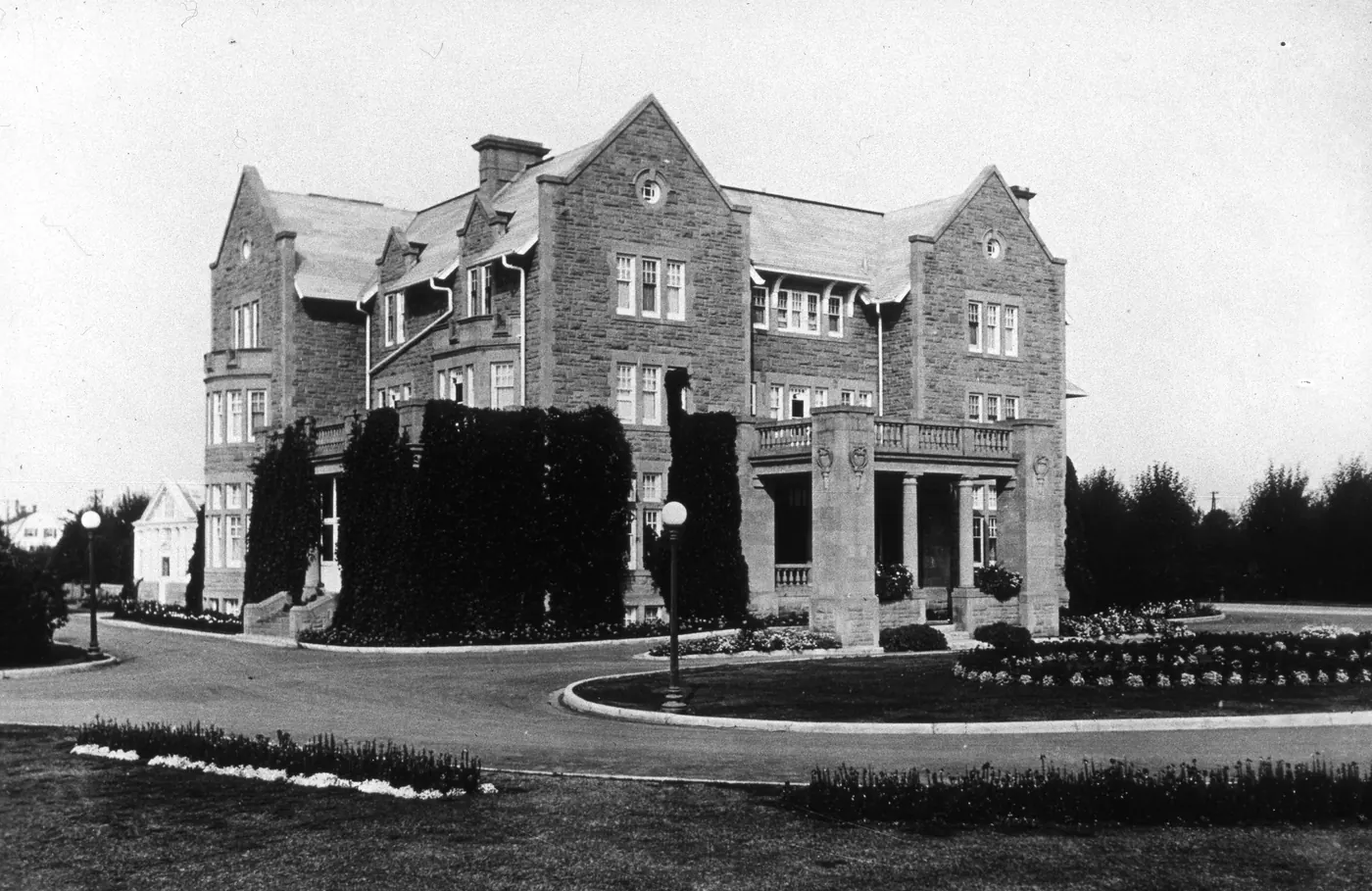
In 1913, Government House opened on Glenora's edge as the home of Alberta's Lieutenant Governor.

Black and white photo of Government House, a three-storey sandstone mansion with gables, a covered entrance and a circular drive with flower beds
1913 Government House, the Lieutenant Governor's new residence on the edge of Glenora, from a glass lantern slide.Photo: University of Alberta Department of Extension. University of Alberta Archives, UAA-1969-097-g081. Public Domain Mark 1.0.

What is the Carruthers Caveat, and does it still apply?

It's the set of rules Carruthers attached when he sold Glenora lots: detached or semi-detached homes only, no shops, and a minimum build cost of $3,500 to $5,000 depending on the lot. More than 100 years later, it's still registered on more than 400 Glenora titles. A 2026 court decision removed it from two properties, and that decision was appealed.

Buying in Glenora? Have a lawyer read the title.

The caveat clashes with newer City zoning in some spots, and courts decide each case on its own facts. A real estate lawyer can tell you what's registered on a specific title and what it means for your plans. We can't check titles. This isn't legal advice.

The 2026 case involved two properties near the planned Glenora LRT stop, where the caveat conflicted with zoning that calls for more homes on a lot. As of July 2026, that decision had been appealed to the Alberta Court of Appeal, so the rules could still change.

What's Glenora like to live in today?

Leafy and close to everything. Glenora has mature trees, curving streets and two ravines, and the City's Historic Resources list has 127 Glenora entries. 124 Street's shops are just east across Groat Ravine. The Valley Line West LRT is being built along Stony Plain Road with a Glenora Stop near 133 Street, and the City hasn't given an opening date.

127
Glenora entries on the City's Historic Resources list
City open data, Nov 23, 2026
8
of them legally designated
7 municipal, 1 federal
2
ravines: MacKinnon and Groat
trails to the river
2026
Glenora LRT Stop canopy steel up (Feb)
no opening date yet
  • Heritage. The National Trust says Glenora has Edmonton's highest concentration of historic resources. Alexander Circle became the first park in Edmonton designated a Municipal Historic Resource, in 2024.
  • Trails. MacKinnon Ravine on the south side, Groat Ravine on the east, both running down to the river valley.
  • Transit. Valley Line West is under construction on Stony Plain Road. The City's latest quarterly report (Q1 2026) gives no opening date.

What do homes in Glenora cost?

City assessment data, pulled November 23, 2026, puts the typical Glenora home without a suite at about $791,500 assessed, and 434 homes are assessed at $1 million or more. Assessments are the City's estimate for property tax. They aren't market values or sale prices. For what homes are actually selling for on a street, ask me directly.

$791,500
typical (median) assessed value
homes without a suite, 2026 assessment
434
homes assessed at $1M or more
2026 assessment
1,358
Glenora homes without a suite
Residential tax class
34
streets in the Street Check
pick yours above

Ava: Own in Glenora? Brent can tell you what homes like yours have actually been selling for, not just the assessment.

Brent Deptuck with Real Broker
What I'm seeing

When I walk Glenora with buyers, the question I hear most isn't about the price. It's "how close is the ravine?", and on most of these streets the trail is just a few minutes away.

Brent Deptuck with Real Broker

Questions people ask about Glenora and MacKinnon Ravine

Was there really a freeway planned through MacKinnon Ravine?

Yes. The 1964 Metropolitan Edmonton Transportation Study, approved by council in December 1964, included a six-lane road through MacKinnon Ravine on Glenora's edge. Survey work started in 1965 and crews cut trees, some over 200 years old.

Who stopped the MacKinnon Ravine freeway?

Neighbours did, led by artist Margaret Chappelle and the Save Our Parks Association, over almost 20 years. The route came out of the City's transportation bylaw in 1974, council ended the river valley roads policy in December 1983, and MacKinnon Ravine Park opened in 1984.

Why is the MacKinnon Ravine trail so wide and flat?

Trees were cleared and the roadbed was graded for the freeway before it was stopped. The paved trail to the river runs along that cleared line.

What is the Carruthers Caveat?

Rules James Carruthers attached to Glenora lots: detached or semi-detached homes only, no shops, and a minimum build cost. It is still registered on more than 400 Glenora titles. A 2026 court decision removed it from two properties and, as of July 2026, was under appeal. Ask a real estate lawyer about any specific title.

Is the LRT coming to Glenora?

Yes. Valley Line West runs along Stony Plain Road with a Glenora Stop near 133 Street. Its platform canopy steel went up in February 2026, and the City's latest quarterly report (Q1 2026) gives no opening date.

How much are homes in Glenora assessed at?

The typical Glenora home without a suite has a 2026 assessed value of about $791,500, and 434 are assessed at $1 million or more (City of Edmonton open data, pulled Nov 23, 2026). Assessments are the City's estimate for property tax, not sale prices.

Where does the name Glenora come from?

Nobody knows for sure. The City lists three ideas: Glenora, Ontario; the Glenora Mill in Montreal; or Scottish 'glen' (valley) plus French 'or' (gold), for ravines running down to a river where people once panned for gold.

Ava
Ava · ravine-side alertsFirst to know when one comes up.

Homes near the ravines don't come up often. Pick the areas you love, and I'll let you know when one does.

No spam. Ava, Brent's assistant, sets it up in a quick chat, and you can stop anytime.

Your next step

Thinking about Glenora? Start with the neighbourhood guide, then talk it through. If you already own here, find out what your home could sell for.

Brent Deptuck
Brent Deptuck with Real BrokerEdmonton real estate · 100+ homes sold587-400-4668 · brent@realestateyeg.ca

Sources

Keep reading

All posts